
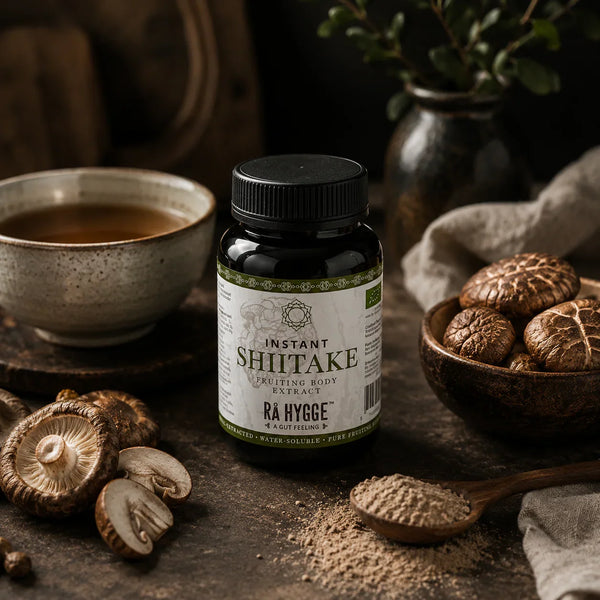
Shiitake (Lentinula edodes) is an edible mushroom with a brown cap that has been cultivated in East Asia for centuries. Today it is one of the most widely cultivated mushrooms in the world, and in Estonian shops you can buy it both fresh and dried. The name comes from Japanese: shii is the tree on whose trunks the mushroom grows in the wild, and take means mushroom.
Where does shiitake come from?
In the wild, shiitake grows on dead broadleaf trees such as oak and chestnut in Japan, China and Korea. It used to be grown on logs, and today it is mostly grown on blocks of pressed sawdust. The mushroom has a fleshy brown cap, pale gills and a hard, fibrous stem.
Why does shiitake taste so good?
Shiitake is known for its umami. Umami is the fifth basic taste alongside sweet, salty, sour and bitter, and it gives food depth and a full, meaty flavour. Dried shiitake has a particularly strong umami. In Japanese cooking, the soaking water from dried shiitake is used as the base for dashi stock.
Like other mushrooms, shiitake contains beta-glucans. Lentinan, which is isolated from shiitake, is one of the most studied mushroom polysaccharides. Research is ongoing, but this does not mean that shiitake in your coffee or soup has any definite health effect.
Shiitake and reishi: what is the difference?
| Shiitake | Reishi | |
|---|---|---|
| Latin name | Lentinula edodes | Ganoderma lucidum |
| Appearance | brown, fleshy cap | glossy, woody cap |
| Edible mushroom? | yes, common in cooking | no, too tough; used as a tea or extract |
| Taste | umami, meaty | bitter |
| In our brand stories | balance | a calmer rhythm |
Ra Hygge products use extracts made from the fruiting bodies of mushrooms. The fruiting body is the part of the mushroom you can see, as opposed to the mycelium that spreads through the growing substrate.
How to use shiitake in the kitchen
Fresh shiitake: cut off the hard stem and keep it for making stock later. The caps are good in stir-fries, risotto and pasta, and with roasted vegetables. Fry them in a hot pan until the edges turn golden.
Dried shiitake: soak the mushrooms in warm water for 20 to 30 minutes. Squeeze out the water, slice the mushrooms into strips and use the soaking water to flavour a soup or sauce.
Quick shiitake miso soup for two
- 6 dried shiitake mushrooms
- 600 ml warm water
- 100 g tofu, cubed
- 2 tbsp light miso paste
- 1 spring onion
Soak the shiitake in warm water for 20 minutes. Take the mushrooms out, slice them into strips and put them in a pot with the soaking water. Simmer over a low heat for five minutes, add the tofu and take the pot off the heat. Stir the miso into a little of the stock until smooth and pour it back into the pot, because miso should not be boiled. Sprinkle with spring onion.
Safety: always cook shiitake thoroughly. Eating raw or undercooked shiitake can, in rare cases, cause a skin rash known as shiitake dermatitis.
Shiitake in Ra Hygge products

- Shiitake mushroom coffee: organic Peruvian Arabica with an extract from shiitake fruiting bodies added after roasting. Available as whole beans and filter grind.
- Shiitake powdered extract 40 g: an organic dual extract of shiitake fruiting bodies, standardised to at least 30% polysaccharides and 20% beta-glucans. Stir it into coffee, tea, soup or a smoothie as directed on the pack.
- Maté Magic: organic green tea with shiitake.
A food supplement is not a substitute for a varied diet.
Frequently asked questions
Does shiitake coffee taste of mushrooms?
The main flavour is roasted coffee. The shiitake extract may add a subtle hint of umami, but what you have in the cup is still coffee.
Can you eat shiitake raw?
We do not recommend it. Always cook shiitake thoroughly, because raw shiitake can, in rare cases, cause a skin rash.
What is the difference between shiitake powder and shiitake coffee?
The coffee already has the extract added during production. The powder you add to a drink or a dish yourself, following the directions on the pack.